Buying a 69 kV transformer is rarely a routine purchase. At this voltage class, one missed specification can affect engineering approval, delivery, installation, or commissioning.
Buyers searching for substation transformers for sale are usually much closer to issuing an RFQ than researching transformer basics. They may already know the required MVA, high-side voltage, low-side voltage, and project location. The next challenge is finding a unit that matches the electrical requirements and the project schedule.
For utilities, EPC firms, industrial facilities, renewable projects, and large electrical contractors, availability can matter as much as price. A transformer that looks attractive on paper has little value if it arrives after the energization date.
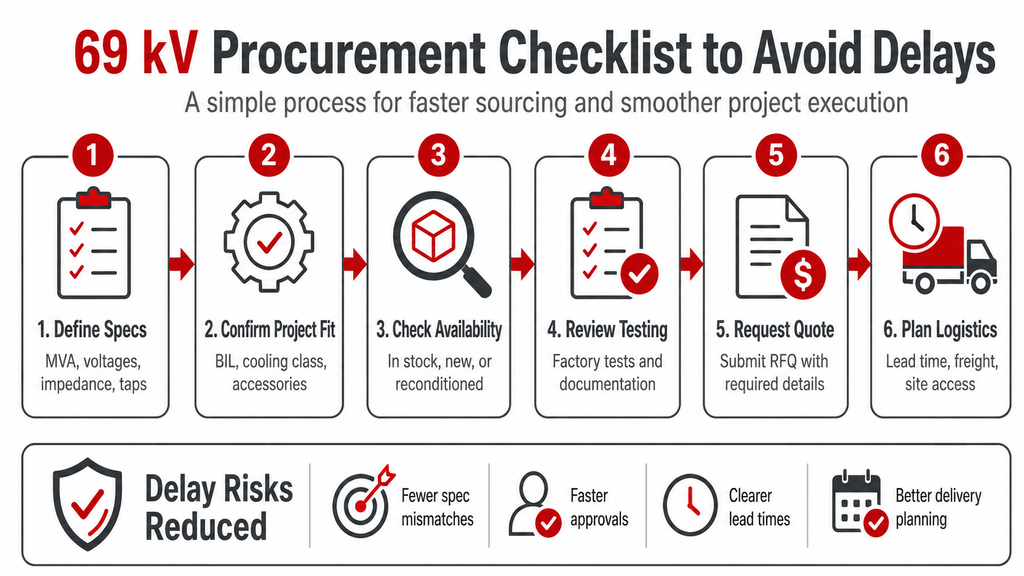
This procurement checklist focuses on the details buyers should confirm before requesting 69 kV transformer options.
Start With Exact Project Requirements
Before contacting a transformer dealer, organize the electrical requirements that define the project.
Start with the high-side voltage, low-side voltage, MVA rating, phase, frequency, and winding configuration. Then confirm the required impedance, basic insulation level, temperature rise, cooling class, and tap arrangement.
A 69 kV substation transformer may also require specific bushings, arresters, CT provisions, control cabinets, fan packages, gauges, relays, or fluid requirements. Site standards can narrow the acceptable options even further.
The more complete the specification, the faster a supplier can screen available equipment. A vague request such as “69 kV transformer needed” may produce options that cannot pass engineering review.
UTB lists both standard and optional specifications for its substation transformer options. View UTB Substation Transformers
Confirm MVA Rating and Cooling Class Early
MVA rating is one of the first filters for any station-class project. However, buyers should also confirm how the rating changes under each cooling stage.
A transformer may carry different ratings under ONAN, ONAF, or other cooling arrangements. That matters when a project depends on fan-assisted capacity during peak loading.
Do not compare units only by the largest MVA number shown on a nameplate or listing. Confirm the base rating, cooling stages, temperature rise, and intended loading profile.
For projects where loading flexibility matters, engineers may reference the current IEEE C57.91 loading guide for mineral-oil-immersed transformers. Review IEEE C57.91-2025
Check High-Side and Low-Side Voltage Details
“69 kV” alone does not fully describe the high-voltage requirement.
Confirm the exact nominal high-side voltage, winding connection, taps, and required BIL. Then document the exact low-side voltage and connection.
Many projects also need a specific neutral arrangement or grounding configuration. These details can determine whether an otherwise attractive transformer works for the application.
If you are comparing several substation transformers for sale, eliminate voltage mismatches early. Re-engineering the project around the wrong transformer can create more cost and delay than continuing the search.
Specify Impedance Before You Request a Quote
Impedance can become a deal breaker late in the procurement process if the buyer does not address it early.
The project engineer may need a specific impedance range for fault-current calculations, relay coordination, voltage regulation, or system compatibility. Even a transformer with the correct voltages and MVA rating may not fit the system if its impedance falls outside the acceptable range.
Include the target impedance and tolerance in the RFQ whenever possible.
If the project can accept a range, state that range. Flexibility can increase the number of viable 69 kV transformers for sale options without sacrificing system requirements.
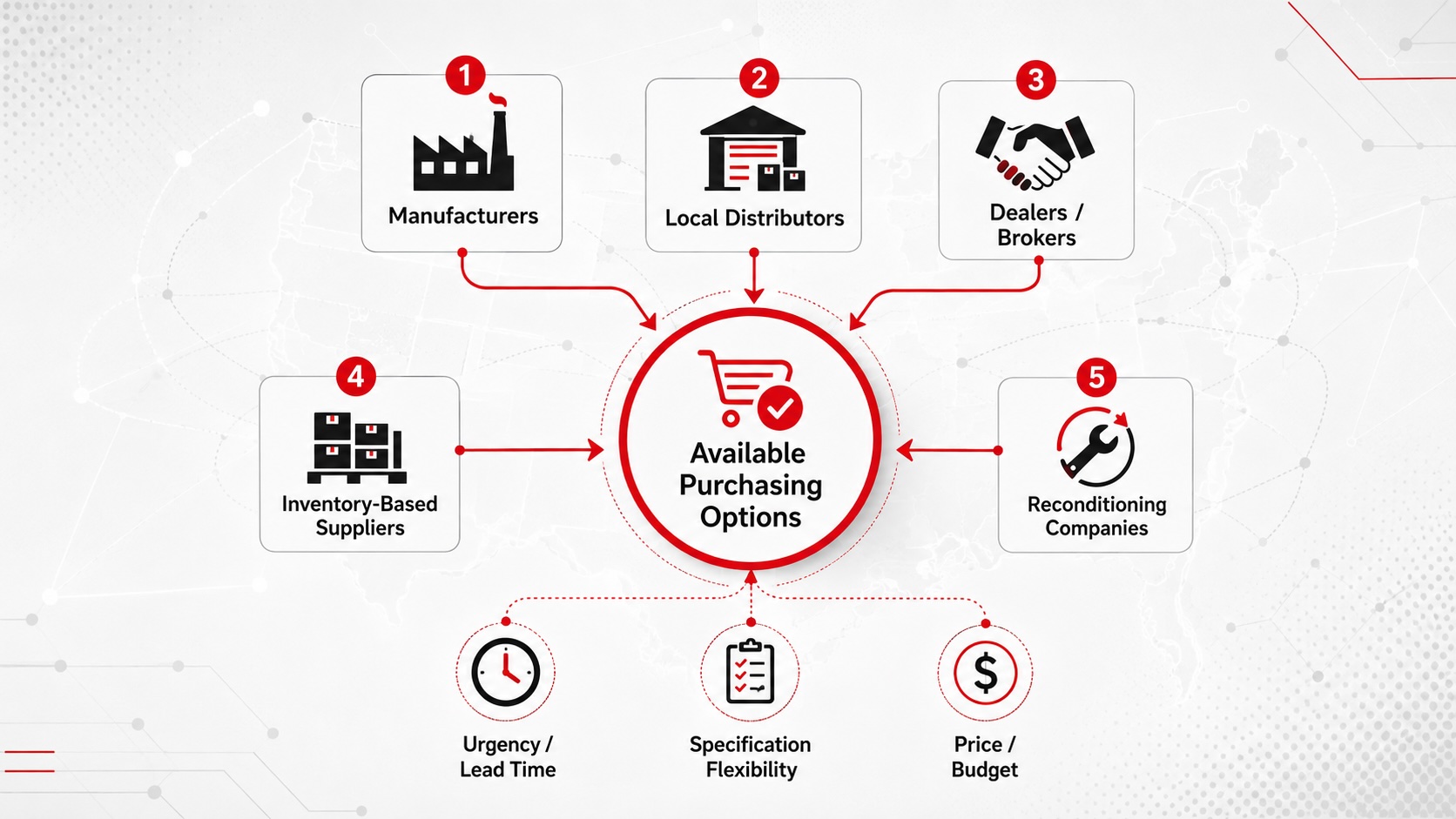
Decide Whether New, Reconditioned, or Existing Inventory Works
The required condition of the transformer can significantly affect sourcing speed.
A new unit may provide the cleanest path when the project requires an exact custom specification. However, a new build can also introduce factory scheduling, engineering, production, testing, and shipping time.
Existing inventory may shorten that path. Reconditioned or rewound equipment can also provide a practical option when the project allows it.
Buyers searching for substation transformers in stock should still evaluate the complete specification. Fast availability only helps when the unit can meet the project requirements.
UTB’s article on transformer lead times explains how inventory, customization, and market conditions can affect delivery schedules. Read About Transformer Lead Times
Review Testing and Documentation Requirements
Testing requirements should appear in the RFQ, not after the purchase order.
Ask what test reports are available and what additional testing the project requires. Common review items can include ratio, winding resistance, impedance, load loss, no-load loss, excitation current, dielectric testing, and temperature-related data.
IEEE C57.12.90 describes test methods for liquid-immersed distribution, power, and regulating transformers. Review IEEE C57.12.90-2021
For used or reconditioned equipment, buyers may also request oil testing, insulation testing, leak checks, accessory verification, and condition documentation.
A complete documentation package can reduce questions during engineering approval and commissioning.
Inspect Accessories and Physical Configuration
Large station projects often require more than the correct electrical nameplate.
Confirm bushing locations, terminal arrangements, cabinet orientation, arresters, brackets, fans, control power requirements, gauges, relays, CTs, sudden-pressure devices, liquid level indicators, and pressure relief devices.
Also confirm tank dimensions, shipping dimensions, total weight, oil weight, and center-of-gravity information when available.
These details affect foundation design, crane planning, transportation, clearances, bus work, cable routing, and final installation.
A station class transformer that electrically matches the project can still create expensive field changes if the physical configuration does not work.
Evaluate Shipping and Site Access Before Award
At 69 kV and larger MVA ratings, logistics deserve early attention.
Ask whether the transformer will ship fully assembled or partially disassembled. Confirm whether bushings, radiators, conservator components, fans, or other accessories require field installation.
Review route restrictions, unloading requirements, crane access, site entrances, overhead obstructions, and foundation readiness.
The best time to identify a transportation problem is before the purchase order.
When a project needs field support, UTB also provides transformer field service, testing, commissioning, repair, and reconditioning options. Explore UTB Service & Repair
Compare Lead Time, Not Just Transformer Price
Price matters, but project delay can cost much more than the difference between two transformer options.
When comparing power transformers for sale, separate equipment price from total project impact. Consider engineering approval time, testing, modifications, freight, field assembly, commissioning, and expected delivery.
A lower-priced transformer with a long or uncertain schedule may create downstream costs for labor, construction, rentals, generation, or delayed production.
This is where inventory access and broad sourcing become valuable. Buyers looking at substation transformers for sale should ask what can actually meet their required-on-site date, not simply what can be quoted.
UTB’s broader substation transformer buyer guide covers additional purchasing considerations for buyers comparing available equipment. Read the Substation Transformer Buyer Guide
What to Include in a 69 kV Transformer RFQ
A strong RFQ gives the supplier enough information to return useful options quickly.
Include the MVA rating, high-side voltage, low-side voltage, frequency, phase, winding connections, impedance, BIL, cooling class, temperature rise, taps, fluid type, and required accessories.
Also include the project location, required delivery date, acceptable equipment condition, testing requirements, documentation requirements, and any utility or owner specifications.
If you need a substation transformer quote quickly, attach an existing nameplate, one-line diagram, specification sheet, or previous transformer drawing when available.
The goal is simple: reduce back-and-forth and make it easier to identify equipment that engineering can approve.
Use This Checklist When Comparing Substation Transformers for Sale
Before moving forward with an option, confirm:
- Required MVA rating and cooling stages
- Exact high-side and low-side voltages
- Winding connections and grounding requirements
- Required impedance and acceptable tolerance
- BIL and insulation requirements
- Tap changer type and tap range
- Fluid type and temperature rise
- Bushings, arresters, CTs, gauges, relays, and controls
- Physical dimensions and total shipping weight
- Testing and documentation requirements
- New, reconditioned, rewound, or used equipment acceptance
- Required-on-site date
- Freight, unloading, assembly, and commissioning responsibilities
This checklist helps procurement teams compare options on the factors that actually determine project fit.
Request 69 kV Transformer Options From UTB
Higher-voltage transformer projects often come down to three things: specification fit, availability, and schedule confidence.
UTB works with utilities, contractors, industrial facilities, and power producers sourcing medium- and high-voltage liquid-filled equipment. For larger station projects, UTB can help identify new, used, rewound, or reconditioned options based on the project requirements.
If you are actively searching for substation transformers for sale, send the electrical specifications and required delivery date with your RFQ. The more information you provide, the faster the available options can be narrowed.
Request 69 kV Transformer Options and let UTB compare sourcing paths for your project.