Across North America, millions of homes, farms, businesses, and public facilities receive electricity through equipment mounted high above the ground on utility poles. One of the most recognizable components of overhead distribution systems is the pole mounted transformer. These transformers have been a critical part of electrical infrastructure for decades, providing reliable voltage reduction and dependable power delivery to end users.
While underground systems continue to expand in certain areas, overhead distribution remains the most widely used method of delivering electricity throughout rural regions, small towns, industrial sites, and many urban areas. Pole mounted transformers offer utilities an efficient, cost-effective, and proven solution for supplying power across large service territories.
Growing electrical demand, infrastructure upgrades, storm recovery efforts, and aging utility equipment continue driving demand for replacement transformers. At the same time, manufacturers have experienced longer production schedules, making available inventory more valuable than ever.
Whether you are replacing storm-damaged equipment, supporting utility expansion projects, or sourcing transformers for new construction, understanding how pole mounted transformers work and how to select the right unit can help keep projects on schedule.
This guide explains everything utility buyers, contractors, municipalities, and engineers should know when purchasing a pole mounted transformer.
What Is a Pole Mounted Transformer?
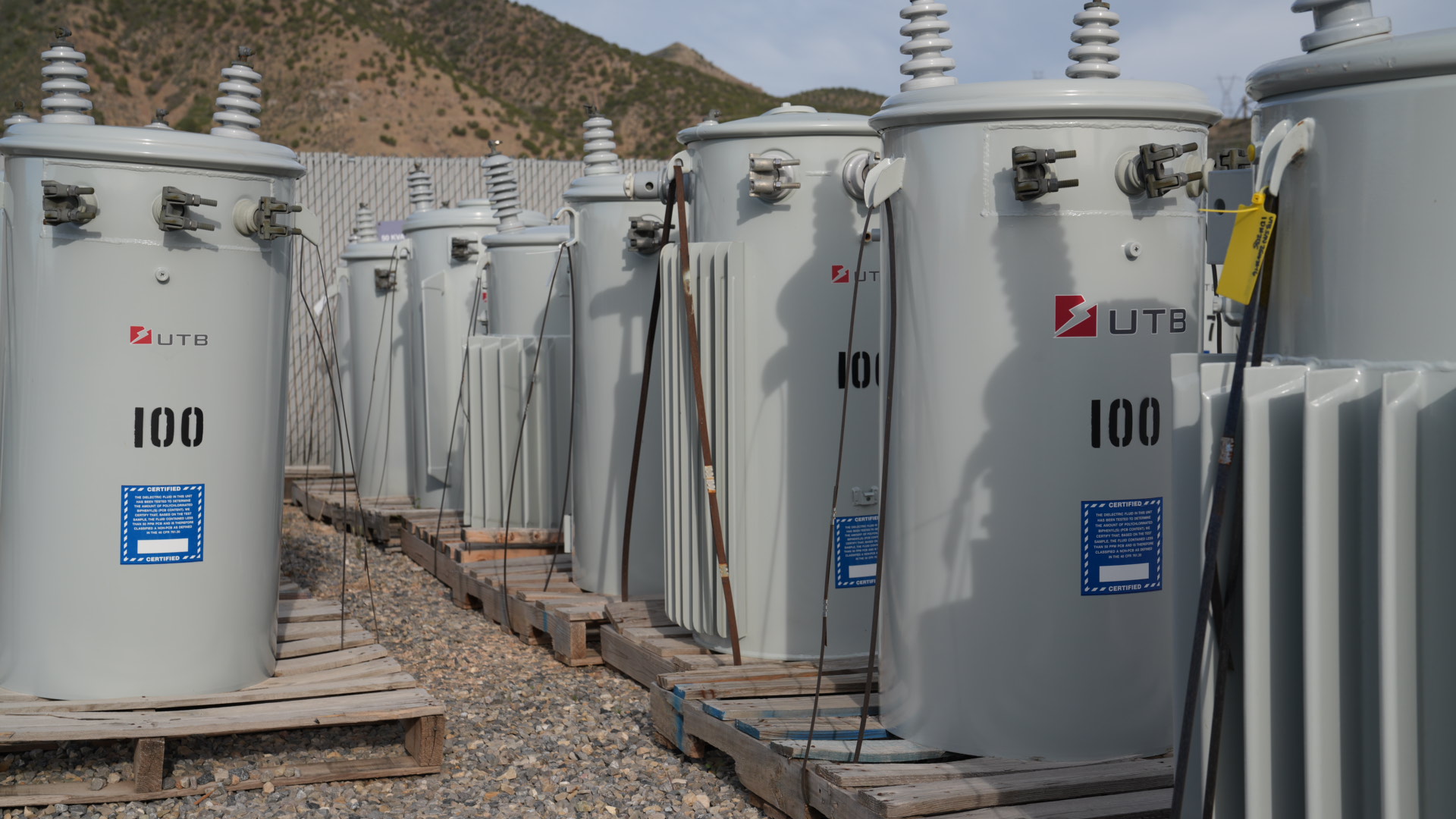
A pole mounted transformer is an overhead distribution transformer installed on utility poles to reduce medium-voltage distribution power into usable service voltages for homes, businesses, farms, and light industrial facilities.
Unlike pad mounted transformers, which are installed on concrete foundations and connected to underground distribution systems, pole mounted transformers receive electricity from overhead primary conductors. The transformer reduces the incoming voltage and sends lower-voltage power to customers through secondary conductors.
Most pole mounted transformers are liquid-filled and use insulating mineral oil to provide cooling and dielectric protection. The transformer tank contains a magnetic core and windings that transfer energy from the primary side to the secondary side with high efficiency and long service life.
Because of their relatively simple design and dependable operation, pole mounted transformers commonly remain in service for several decades when properly maintained.
How Pole Mounted Transformers Work
Electricity generated at power plants travels through high-voltage transmission systems before reaching utility substations. At these substations, voltage is reduced to medium-voltage distribution levels suitable for local electrical systems.
Pole mounted transformers perform the final voltage reduction before electricity reaches customers.
Primary voltage enters the transformer from overhead distribution lines. Inside the transformer tank, magnetic induction transfers electrical energy between primary and secondary windings. This process lowers the voltage to levels appropriate for residential, commercial, agricultural, or light industrial use.
The reduced voltage exits through secondary bushings and travels to customer service entrances through overhead or underground service conductors.
Since transformers have no moving parts, they require relatively little maintenance compared to many other pieces of electrical equipment. This durability is one reason pole mounted transformers remain one of the most widely used utility assets throughout North America.
Why Utilities Continue Using Pole Mounted Transformers
Overhead electrical systems continue to serve a significant portion of North America’s electrical grid. For many applications, pole mounted transformers provide practical advantages that make them the preferred solution.
Installation costs for overhead systems are generally lower than underground construction. Utilities can often install new equipment more quickly and perform inspections without excavation or specialized underground infrastructure.
Maintenance crews can visually inspect overhead equipment from the ground, allowing many issues to be identified quickly. Repairs and replacements are often completed faster than similar work involving underground systems.
Pole mounted transformers are especially valuable in rural areas where long distribution distances make underground systems less economical.
These factors continue making overhead distribution a dependable and cost-effective option for utilities and municipalities.
Common Utility Applications
Pole mounted transformers support a wide variety of utility applications across North America.
Residential neighborhoods frequently rely on overhead distribution systems, particularly in established communities and rural developments. A single transformer may provide service to several homes depending on loading requirements and local utility practices.
Agricultural operations also depend heavily on pole mounted transformers. Farms require reliable electricity for irrigation systems, grain handling equipment, livestock facilities, workshops, and processing operations.
Commercial facilities, small industrial sites, schools, municipal buildings, and public infrastructure often receive service through overhead distribution systems as well.
Utilities also use pole mounted transformers for street lighting systems, traffic controls, communication infrastructure, pumping stations, and other public services.
Because overhead systems remain widespread, replacement transformers continue to be an important part of utility inventory planning.
Rural Distribution Applications
Pole mounted transformers are particularly common in rural electrical systems.
Large service territories often require miles of overhead distribution lines to connect customers spread across farms, ranches, industrial facilities, and remote communities. Installing underground systems over these distances is frequently cost-prohibitive.
Pole mounted transformers allow utilities to deliver reliable electrical service while minimizing construction costs.
These transformers also simplify future system expansion. Additional customers can often be connected without major infrastructure changes, making overhead distribution highly adaptable as communities grow.
For many utilities, pole mounted transformers remain the most practical solution for serving rural customers.
Single-Phase and Three-Phase Pole Mounted Transformers
Pole mounted transformers are available in both single-phase and three-phase configurations.
Single-phase transformers are the most common type and typically serve residential customers, farms, and small commercial facilities. These units provide dependable service for lighting, heating, cooling, and general electrical loads.
Three-phase pole mounted transformers support larger commercial and industrial applications requiring greater electrical capacity. Manufacturing operations, municipal facilities, pumping stations, and agricultural processing plants often depend on three-phase power.
Selecting the correct phase configuration is essential when replacing existing equipment or planning new installations.
Common Voltage Classes and kVA Ratings
Pole mounted transformers are manufactured in a wide range of capacities and voltage classes to meet utility requirements.
Utilities determine transformer specifications based on distribution voltages, expected customer loads, future growth projections, and system design standards.
Transformer capacities range from smaller residential units to larger transformers supporting commercial and industrial applications.
In addition to kVA rating, buyers should verify primary voltage, secondary voltage, impedance, BIL rating, tap arrangements, insulation class, and utility specifications before purchasing replacement equipment.
Careful review of these details helps ensure compatibility with existing systems.
Understanding Transformer Components
Although pole mounted transformers appear relatively simple from the outside, several components work together to provide dependable operation.
The transformer core transfers energy efficiently between windings while minimizing losses. Copper or aluminum conductors carry electrical current through insulated windings designed for decades of service.
Mineral oil provides cooling and insulation while helping protect internal components from electrical stress. Bushings provide connection points for incoming and outgoing conductors, while fuses and protective devices help prevent equipment damage during fault conditions.
Pressure relief devices, grounding systems, and lightning protection components further improve reliability and system safety.
Each component contributes to long-term transformer performance.
Mineral Oil and Alternative Insulating Fluids
Most pole mounted transformers use mineral oil because of its proven performance, availability, and long history within utility applications.
Certain installations may require alternative dielectric fluids that provide additional environmental benefits or enhanced fire resistance.
Utilities select insulating fluids based on operating conditions, environmental requirements, and company standards.
Matching the insulating fluid to application requirements helps ensure dependable long-term operation.
Common Causes of Pole Mounted Transformer Failures
While transformers are designed for long service lives, several conditions can contribute to equipment failure.
Severe weather events remain one of the leading causes of transformer replacement. Lightning strikes, high winds, ice accumulation, falling trees, and vehicle accidents can all damage overhead electrical systems.
Aging insulation, overloading, contamination, and internal component failures may also reduce transformer life over time.
As electrical demand increases, older transformers may eventually require replacement with higher-capacity units capable of supporting modern loads.
Maintaining available inventory helps utilities respond quickly when unexpected failures occur.
New vs. Reconditioned Pole Mounted Transformers
Extended manufacturing lead times have increased interest in professionally reconditioned equipment.
A properly reconditioned transformer undergoes testing, inspection, repair, and refurbishment before returning to service. When completed according to industry standards, reconditioned units can provide dependable operation while reducing delivery times.
For emergency replacements, available reconditioned inventory may restore service much faster than waiting for factory production.
Many organizations choose a combination of new and reconditioned transformers depending on project requirements, budgets, and timelines.
Current Market Conditions and Lead Times
Utilities continue investing in infrastructure modernization, renewable energy projects, storm hardening efforts, and system expansion.
These factors have increased demand for distribution transformers across North America. Manufacturing schedules for many transformer types remain longer than historical averages, making early planning increasingly important.
Organizations requiring immediate replacement equipment often benefit from suppliers maintaining available inventory.
Working with experienced transformer suppliers can help buyers locate equipment that matches technical requirements while reducing project delays.
Why Ready-to-Ship Inventory Matters
Transformer failures rarely occur according to project schedules.
Storm damage, vehicle accidents, aging infrastructure, and increasing electrical demand can all create urgent replacement needs. Waiting months for factory production may delay restoration efforts and increase operational costs.
Ready-to-ship inventory allows utilities and contractors to respond more quickly when unexpected situations arise.
At UTB Transformers, we work with utilities, municipalities, contractors, and industrial customers throughout North America to locate available pole mounted transformers, distribution transformers, and replacement equipment that meets project requirements.
Whether the need is new or professionally reconditioned equipment, our goal is helping customers reduce downtime and keep projects moving.
Questions Every Buyer Should Ask
Before purchasing a pole mounted transformer, buyers should verify more than just the kVA rating.
Confirm the required primary voltage, secondary voltage, phase configuration, BIL rating, impedance, tap arrangement, insulating fluid, and applicable utility specifications.
Reviewing these details early helps prevent compatibility issues and installation delays.
Working with an experienced transformer supplier can simplify this process and help identify available inventory that matches project requirements.
Partner with UTB Transformers
Whether you are replacing storm-damaged equipment, supporting utility expansion, or responding to an emergency outage, choosing the right supplier is just as important as selecting the transformer itself.
UTB Transformers supplies ready-to-ship pole mounted transformers for utility, agricultural, commercial, municipal, and industrial applications across North America. Our team understands the challenges buyers face in today’s market and works to locate dependable equipment that meets both technical requirements and project timelines.
If you’re looking for a pole mounted transformer, contact UTB Transformers today. We’ll help identify available inventory, answer specification questions, and provide a competitive quote so your project can move forward with confidence.