
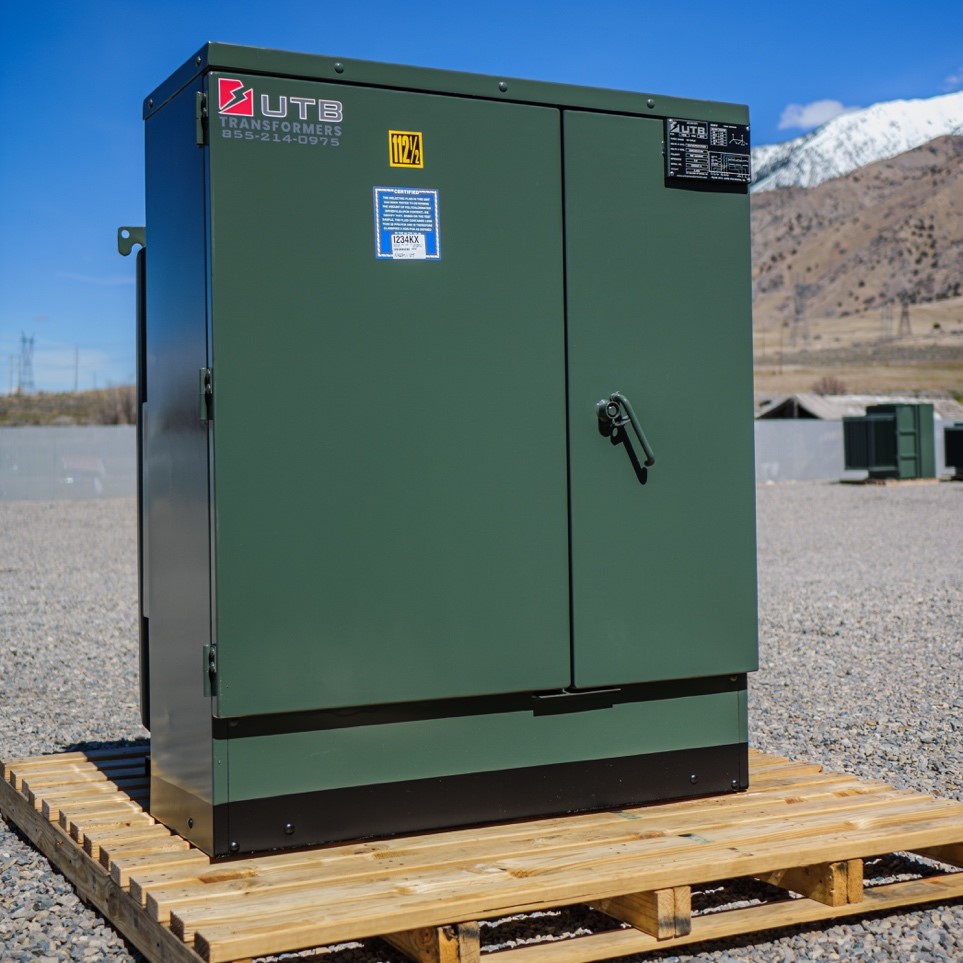

Correct transformer sizing is essential for maintaining efficiency, preventing overload, and ensuring long-term system reliability. Determining the required kVA is not just a theoretical exercise, it directly impacts equipment performance, operating costs, and future scalability. A transformer that is too small will overheat and fail prematurely, while an oversized unit increases capital cost and operates inefficiently under light load.
A structured approach to calculating kVA allows you to select a transformer that matches real demand while accounting for operational conditions.
Understanding kVA in Transformer Sizing
kVA, or kilovolt-amperes, defines the apparent power a transformer can supply. Unlike kilowatts, which represent real power, kVA includes both real and reactive components. This distinction is critical because most commercial and industrial loads are inductive, meaning they draw reactive power that must be supported by the transformer. For this reason, transformer ratings are always expressed in kVA rather than kW.
Calculating the Base Electrical Load
Accurate sizing begins with determining total system demand. This includes all connected loads such as lighting, HVAC systems, and process equipment. The total load must then be expressed in kVA.
When load is known in kilowatts, conversion is performed by dividing by power factor. A 100 kW load at a 0.85 power factor requires approximately 118 kVA, reflecting the additional apparent power needed to support inductive components.
When voltage and current are known, kVA can be calculated directly. In single-phase systems, kVA equals voltage multiplied by current divided by 1,000. In three-phase systems, the calculation incorporates the square root of three to account for phase relationships, then divides by 1,000. These calculations establish the baseline transformer capacity before adjustments.
Incorporating Power Factor Effects
Power factor significantly influences transformer demand. Most systems operate between 0.8 and 0.9, and lower values increase required kVA for the same real power output. Neglecting power factor leads to undersized transformers, resulting in excessive heat, reduced efficiency, and potential voltage instability. Using realistic power factor assumptions ensures the calculated kVA reflects actual operating conditions.
Applying a Practical Safety Margin
Electrical demand is not static. Load variations, motor inrush currents, and incremental system expansion all contribute to higher real-world demand than calculated steady-state values.
To compensate, it is standard practice to increase calculated kVA by approximately 25 percent. This margin provides operational headroom, reduces thermal stress, and improves overall system resilience without significantly increasing cost.
Using the 80 Percent Loading Guideline
Transformer longevity and efficiency depend heavily on operating load. Continuous operation near full capacity accelerates insulation degradation and increases thermal stress.
Industry practice is to size transformers so that expected load does not exceed 80 percent of the unit’s rated capacity. This requires dividing the adjusted kVA by 0.8 to determine the minimum acceptable transformer size. This approach ensures stable performance under continuous operation and accommodates short-term load spikes.
Selecting a Standard Transformer Rating
Transformers are manufactured in standardized kVA ratings, so final selection involves rounding up to the next available size. This step ensures the transformer can safely handle calculated demand while aligning with available equipment specifications.Selecting a unit below the required capacity introduces risk, while selecting the next standard size provides a practical balance between cost and performance.
A facility with a 60 kW load operating at a 0.85 power factor requires approximately 70.6 kVA. Applying a 25 percent safety margin increases this to roughly 88 kVA. Dividing by 0.8 to maintain proper loading results in a final requirement near 110 kVA. The appropriate selection in this case is the next standard transformer size above this value, ensuring adequate capacity and reliable operation.
Final Considerations
Proper kVA sizing integrates load calculation, power factor correction, capacity buffering, and operational limits into a single decision. Skipping any step increases the likelihood of inefficiency or failure.
For projects where accuracy is critical, working with a transformer supplier can help validate assumptions, confirm sizing, and ensure compliance with application requirements. The result is a transformer that operates efficiently, handles real-world conditions, and supports long-term system performance.